Interviewed and written by a BCBWP Volunteer
BC Brain Wellness Programs have immediate impact for their participants, but they also have impact that expands through time and into the lives of other people as well. Take, for example, the in-person Intergenerational Dance Program, a three-year initiative funded by donor Matt Yedlin.
Matt celebrates the ability of dance to “help people move, connect and use their brains in new ways.” Anne Kates (participant) and Anna-Liisa Volohhonski (volunteer) celebrate the connection they made during the program’s first session, in fall 2025, and have enjoyed ever since.
Anna-Liisa, a UBC international student from Estonia who in spring 2026 completed her B.Sc. in Neuroscience, says volunteering is part of her life. “It is good for my well-being.” With years of dance in her background, she made the Dance Program the first of her volunteer roles with the BCBWP.
Anne — Winnipeg-born, with degrees and skills that have taken her to Toronto, Iqaluit, Prince George and now Vancouver — also has a dance background. Even so, the class was her husband’s idea. “Wolf takes one of the online exercise classes, and he heard about the Dance Program. ‘Let’s learn to waltz,’ he said. I already knew how to waltz! But I’m happiest when I’m dancing. Of course I agreed.”
One of the volunteer roles in the Dance Program is to be a participant’s dance partner, as needed. When Wolf partnered some of the other female participants, Anna-Liisa danced with Anne. “We immediately connected,” says Anna-Liisa. “Anne was wearing sparkly pink hair clips — I like pink, and I liked her style.” Anne smiles at the memory, and adds, “She reminded me of my granddaughter.”
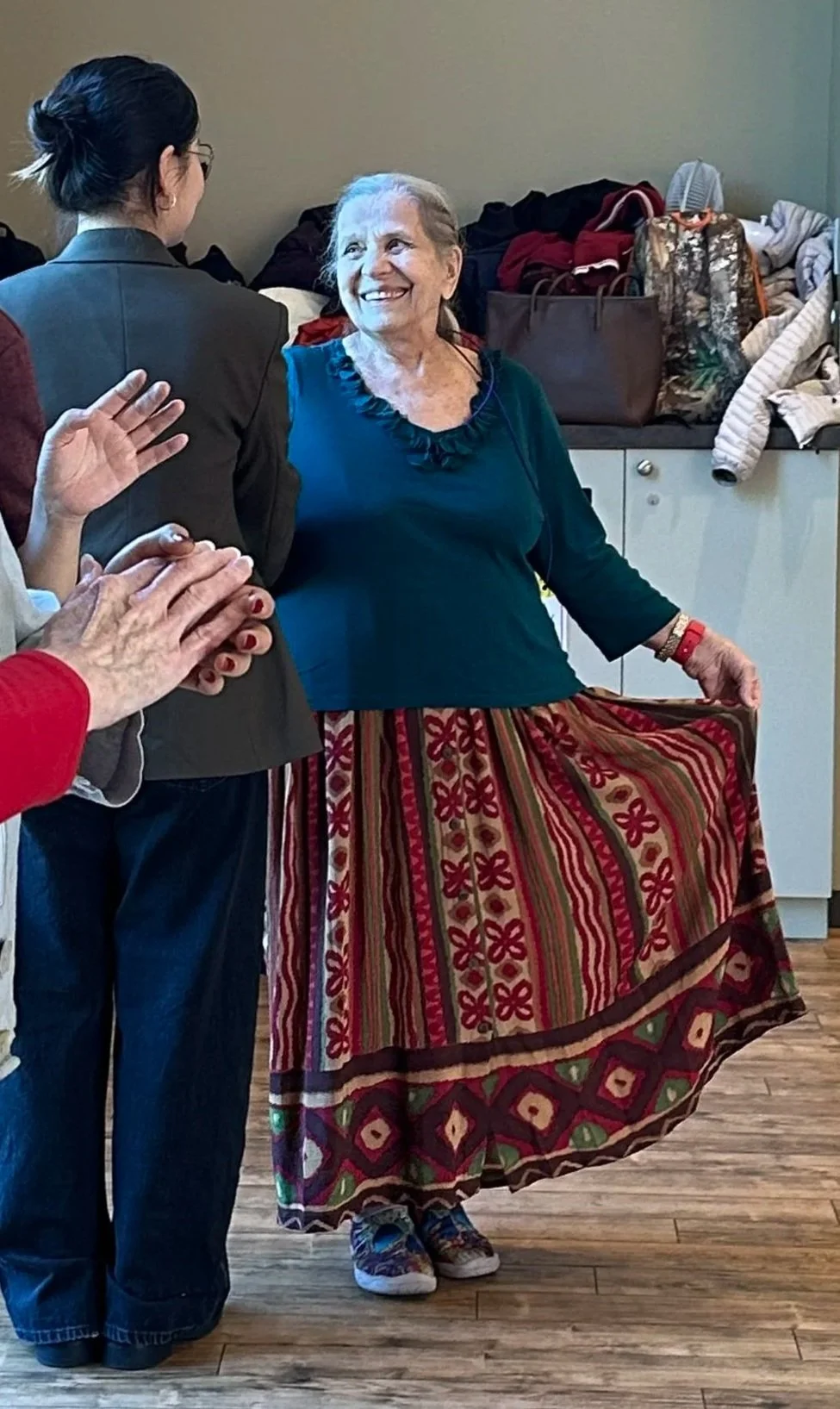
They danced together, at a few more of the classes, and Anna-Liisa continued to admire Anne’s style — “She’d wear this colourful long skirt, and swirl it as she danced.” When Anna-Liisa realized exams would force her to miss the end of the session, she made a point of saying good-bye.
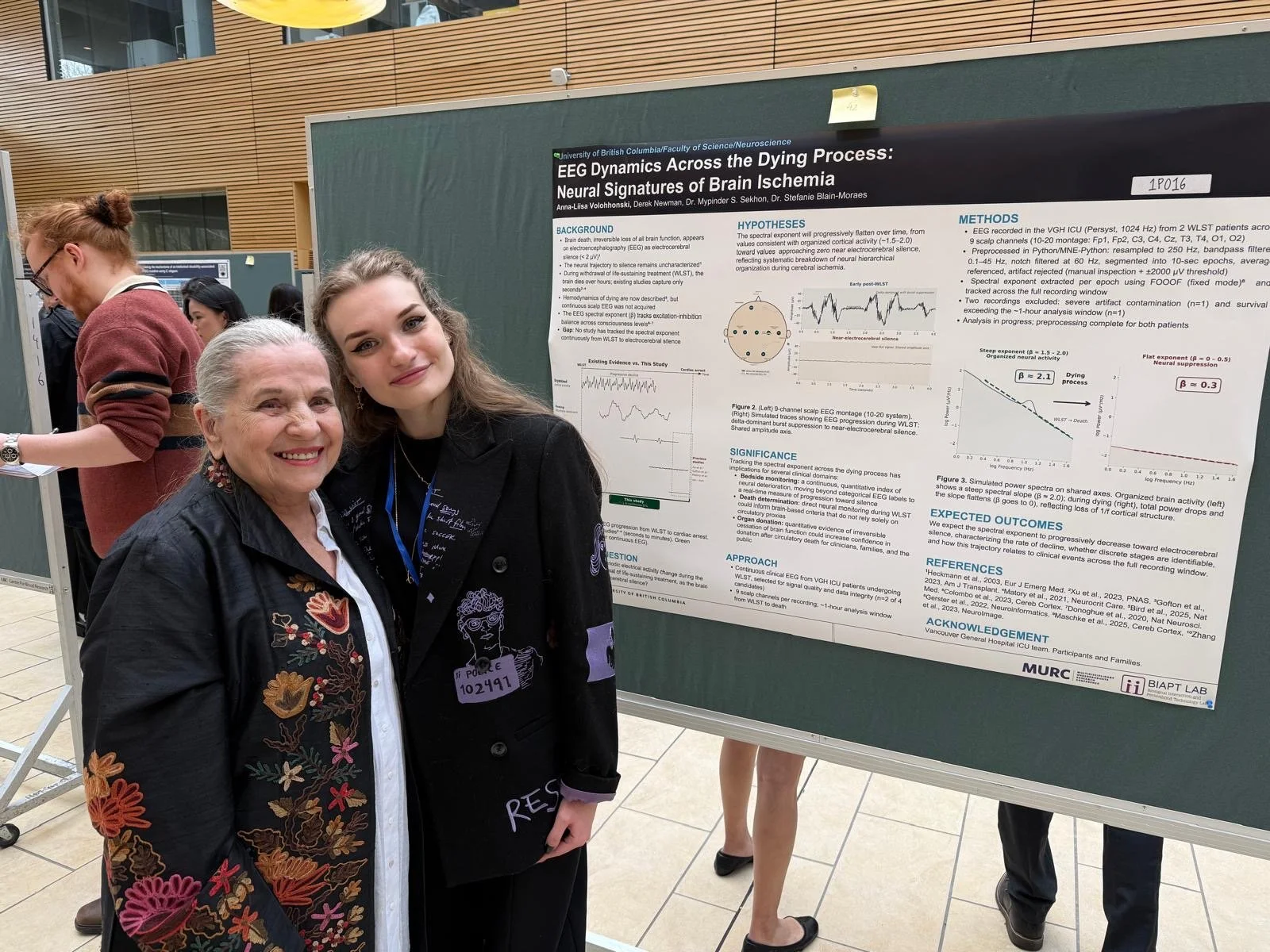
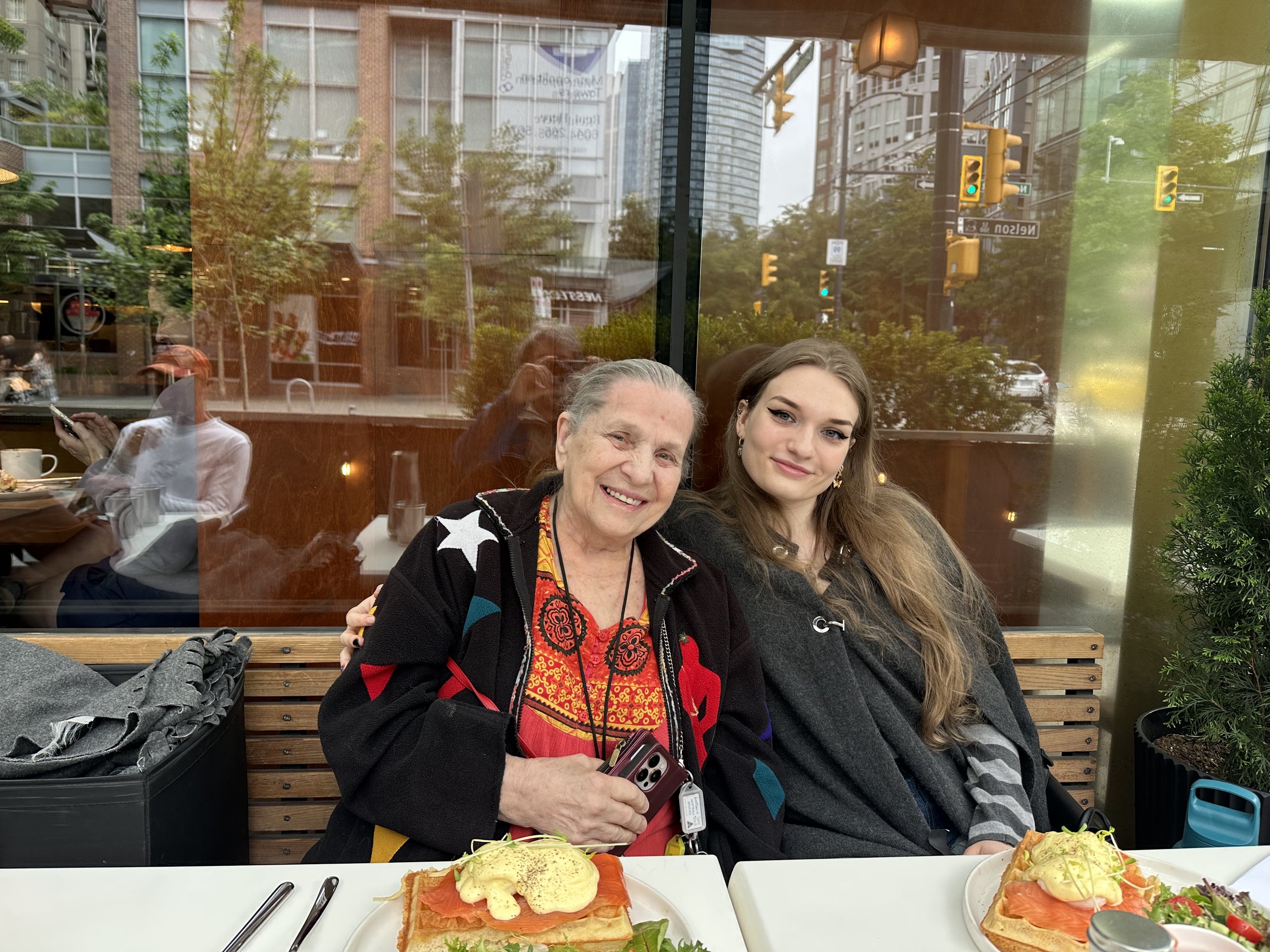
This led to a birthday celebration once Anna-Liisa was back from Christmas at home, then Easter dinner with Anne’s family, and a continuing relationship that — along with casual visits — has included a UBC rugby game and Anne’s supportive presence when Anna-Liisa presented her research at an undergrad conference. “I call her Nanna,” says Anna-Liisa. “She is part of my circle,” says Anne.
They treasure their friendship, but Anne rejects the idea that they are somehow exceptional. “I think if a human is open to other human beings, then connection happens.” Anna-Liisa nods, and describes the kind of openness she saw develop during the program. “People at first were very reserved. After a few classes, they became familiar with each other, they had dance in common, they began to wear brighter clothes, and they connected with people outside their own ethnic group.”
All kinds of connection. Just what Matt Yedlin had in mind. (Also dance skills, of course. Wolf mastered the waltz, and the cha-cha as well.)