
Yoga and PTSD: A Body-First Approach to Healing Trauma
By: Monique

In 1915, Charles Myers called it shell shock.
In 1972, Dr. Shatan described it as post-Vietnam syndrome.
Today, in 2025, we recognize it as post-traumatic stress disorder (PTSD).
Trauma refers to an emotional response to a highly distressing event that has lasting effects on a person’s physical, mental, and social well-being.
Nowadays, trauma is no longer confined to the trenches of war. It can stem from single events or from prolonged experiences that arise in our everyday environments, relationships, and perceptions.
A global estimate suggests that 71.3% of people will experience at least one traumatic event, and about 10% of them will develop PTSD.
The challenge is that even after the event ends, its effects persist. Trauma disrupts the body and mind, often manifesting as avoidant, hyperactive, and hyperaroused thoughts and behaviours.
Trauma affects people from all backgrounds.
It indiscriminately scars, isolates, and consumes.
Why Talk Therapy Isn’t Enough
Cognitive behavioural therapy (CBT) is currently the first-line treatment for trauma and PTSD. But this does not make it a universal solution.
While CBT helps many, it can also encounter significant obstacles. Notably, trauma symptoms themselves can often interfere with standard practices and talk-based treatments.
Consider the reliance on verbal recall:
Talk therapy essentially depends on patients describing and verbally articulating their traumatic experiences so practitioners can support and treat them.
Yet research shows that when trauma survivors are asked to remember traumatic events, activity in speech-producing regions of the brain (Broca’s area) often decreases. In other words, speaking about trauma is very difficult and sometimes even destabilizing.
For individuals with limited capacity for regulation or low distress tolerance, verbalizing trauma can actually intensify symptoms. This is because speaking about trauma means remembering it, and remembering often means reliving it.
Unsurprisingly, some patients might withdraw from therapy, show low adherence, or drop out early.
So, how are we addressing these barriers in treatment?
Exploring New Approaches
Among the highlighted methods is Trauma Centre Trauma-Sensitive Yoga (TCTSY).
What is TCTSY?
As the name suggests, TCTSY is a yoga-based treatment specifically designed for trauma and PTSD.
David Emerson, co-founder of TCTSY, describes it as:
“A body-first approach that considers trauma in the whole person, thus targeting our previously identified obstacle with talk therapy.”
Based on the traditional purpose of hatha yoga to promote self-care and healing, TCTSY invites participants to explore movement without relying on verbal memories. In doing so, the practice focuses on the individual and their body. [1]
Alongside core yoga principles (i.e., breathing, body position, and mindfulness), TCTSY integrates five domains essential to trauma healing:
1. Interoception
Rebuilding a safe relationship between the mind and body by noticing and interpreting internal signals and sensations.
2. Invitational language
Shifting power back to participants by removing pressure or expectations and allowing them to engage at their own pace.
3. Making choices
Providing low-stakes options so participants can make decisions that best serve their needs in the present moment.
4. Non-coercion
Minimizing verbal and nonverbal power dynamics to maintain a safe, transparent, and non-hierarchical space.
5. Shared authentic experience
Engaging together in practices that allow individuals to feel seen, heard, and valued.
How TCTSY Supports Healing
A growing body of research supports the wide-reaching benefits of TCTSY.
Dr. Bessel A. van der Kolk states:
“Yoga helps a person to regulate their emotional and physiological states. It allows the body to regain its natural [movement]…What[2] is beautiful about Yoga is that it teaches us—and this is a critical point for trauma-sensitive people who feel trapped in their memory sensations—that things come to an end.”
Indeed, studies echo this.
Beyond physical benefits, yoga supports trauma healing at neurobiological, physiological, biochemical, and psychological levels. TCTSY goes further by creating a space free of trauma dynamics, where reconnecting the mind and body is made possible.
The overall effect shifts participants from a fight-or-flight state to a rest-and-digest state.
As one participant describes:
“[I] feel like I have more of an idea that the future is real, and that I can achieve my goals. I'm starting to really care about our future a lot...it feels like it's just all opening up.”
What the Research Says About TCTSY
A 2023 study of women veterans with military sexual trauma found that TCTSY is just as effective as prescribed therapy. That is, they equally support healing through sustained reductions in PTSD symptoms.
However, a separate 2021 study on the same population reported faster outcomes with TCTSY.
Participants are also far more likely to start, continue, and complete TCTSY, which is important because the most effective form of treatment is the one people can follow through with.
By returning regularly, participants experience the compounding emotional, psychological, physical, and spiritual benefits of yoga.
This matters even more since sustainable, long-term healing is the goal.
Why This Matters for the Future of Trauma Care
Simply put, yoga works.
Though certainly not a universal solution, TCTSY is affordable, accessible, and adaptable across cultures and populations, including survivors of human trafficking, incarcerated individuals, refugees, veterans, Indigenous peoples, and gender-nonconforming youth.
One example of this expanding accessibility is weekly online TCTSY group sessions provided by the Center for Trauma and Embodiment.
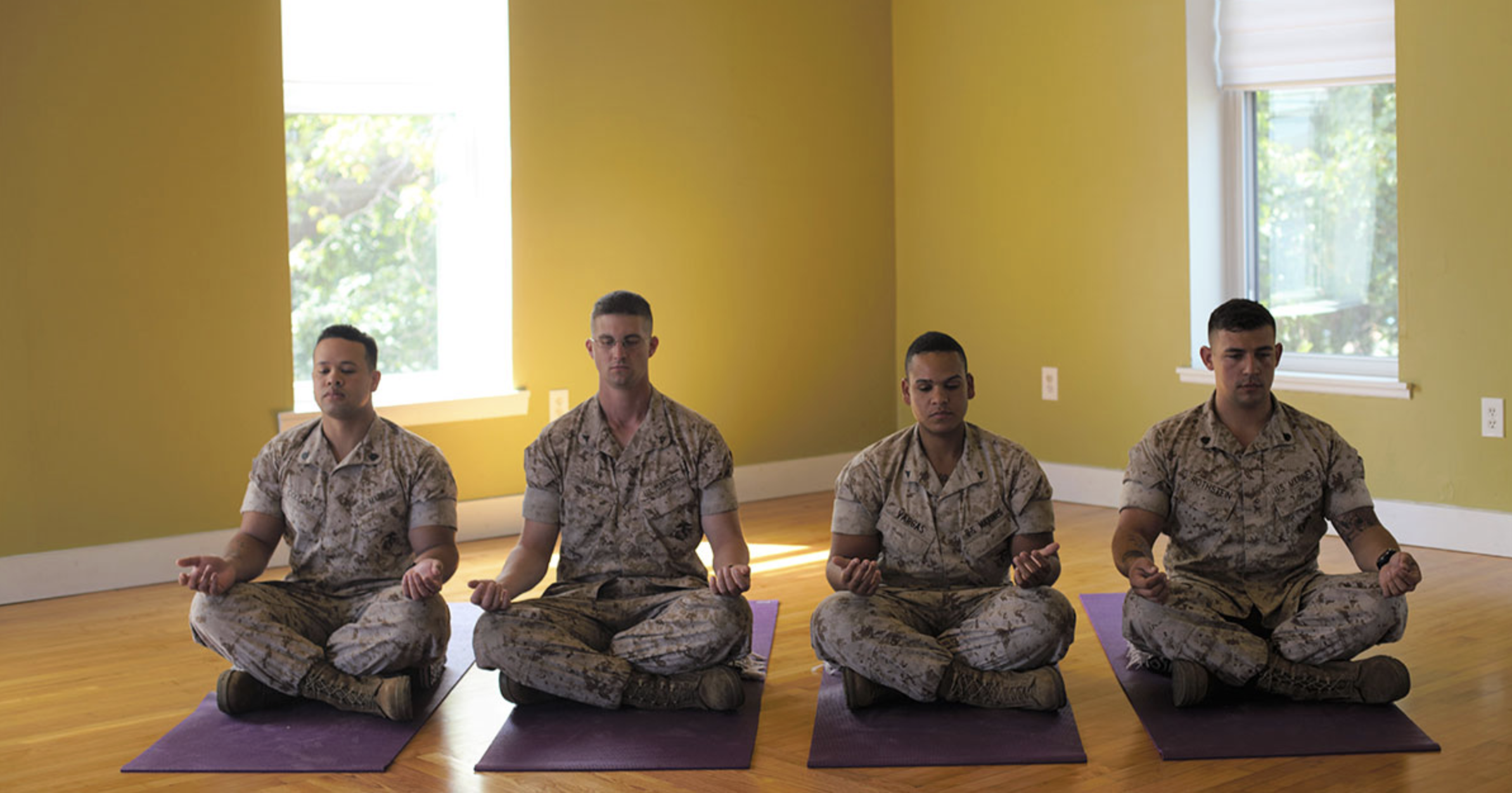
But this is only the beginning, a call for continued engagement and further research.
Rising health, racial, and climate challenges remind us that trauma is evolving, so the methods designed to treat it must evolve too.
Among these approaches, TCTSY reflects a broader shift in modern psychiatry toward process-based, whole-person care. Such efforts are crucial because effective care begins with understanding individual contexts, meeting people where they are, and supporting their needs.
TCTSY is more than an emerging innovation. It represents a promise of healing that gives participants the chance to reclaim not only their breath but also their lives.
For readers interested in additional wellness resources, the BC Brain Wellness Program offers yoga programs that, while not trauma-based, the program may support overall physical and mental well-being. To learn more or register, please visit BC Brain Wellness Program Online Exercise and Yoga Classes.
Note: readers are encouraged to consult with qualified health practitioners before beginning any new treatment.