
Hard Work & Laughter: Our “Person-Centered Approach” in Action
By a BC Brain Wellness Program Volunteer
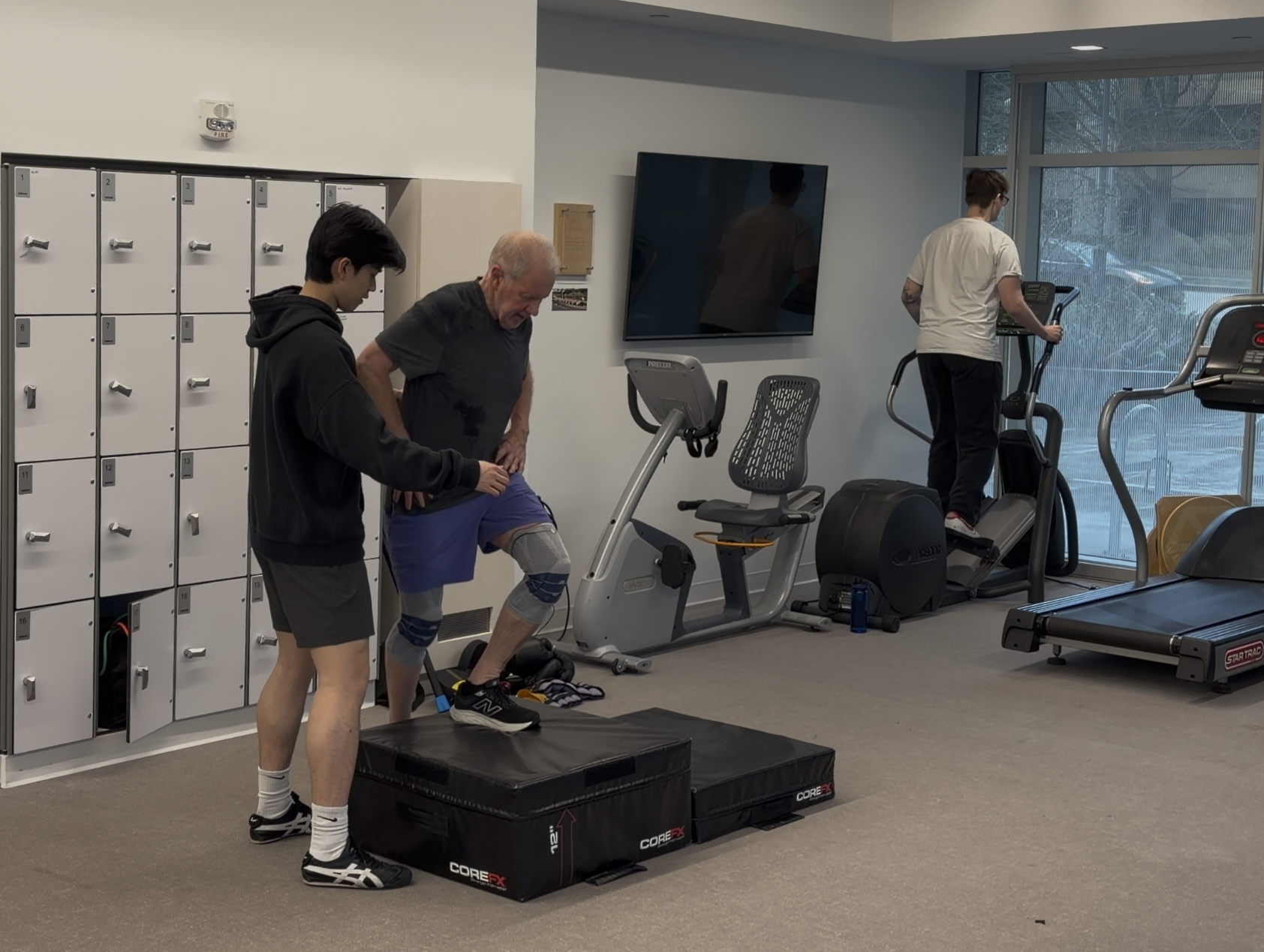
The BC Brain Wellness Program takes a “person-centered approach” to its work. The description comes to life when you spend time with one of the Program’s in-person exercise classes. Then you see the approach in action. And you discover its power.
You learn why a participant says, “I was so excited to start coming here,” and why a student volunteer says, “I now see exercise through a different lens.”
Take, for example, the 11 a.m. group class offered each Wednesday in UBC’s Chan Gunn Pavilion. All group exercise classes follow the same format: five “zones” around the gym space, each zone with an array of exercise resources to support a specific focus and intent. Students visit each zone in turn, where they perform its exercises with the support of kinesiology students and the instructor.
This class is focused around the needs of stroke survivors and people with chronic neurological conditions. Beyond that, around the needs of each individual participant. Beyond that, the needs of each participant, that day.
As an observer, you notice two things: hard work… and laughter. So much laughter!
It’s not that the challenges they face are easy. It is that tough challenges are being faced in a context of human warmth and connection. The connection is evident in class, in pre-class chatter, and in the fact that participants tend to recommend the class to other stroke survivors. “This is my third time here,” says newbie Ivan. “Ryan recommended it.” Ryan, with a year under his belt, in turn points to Manjit: “He got me here.” Manjit grins. “I met Ryan in a speech therapy class, told him this was the place to do some serious work.”
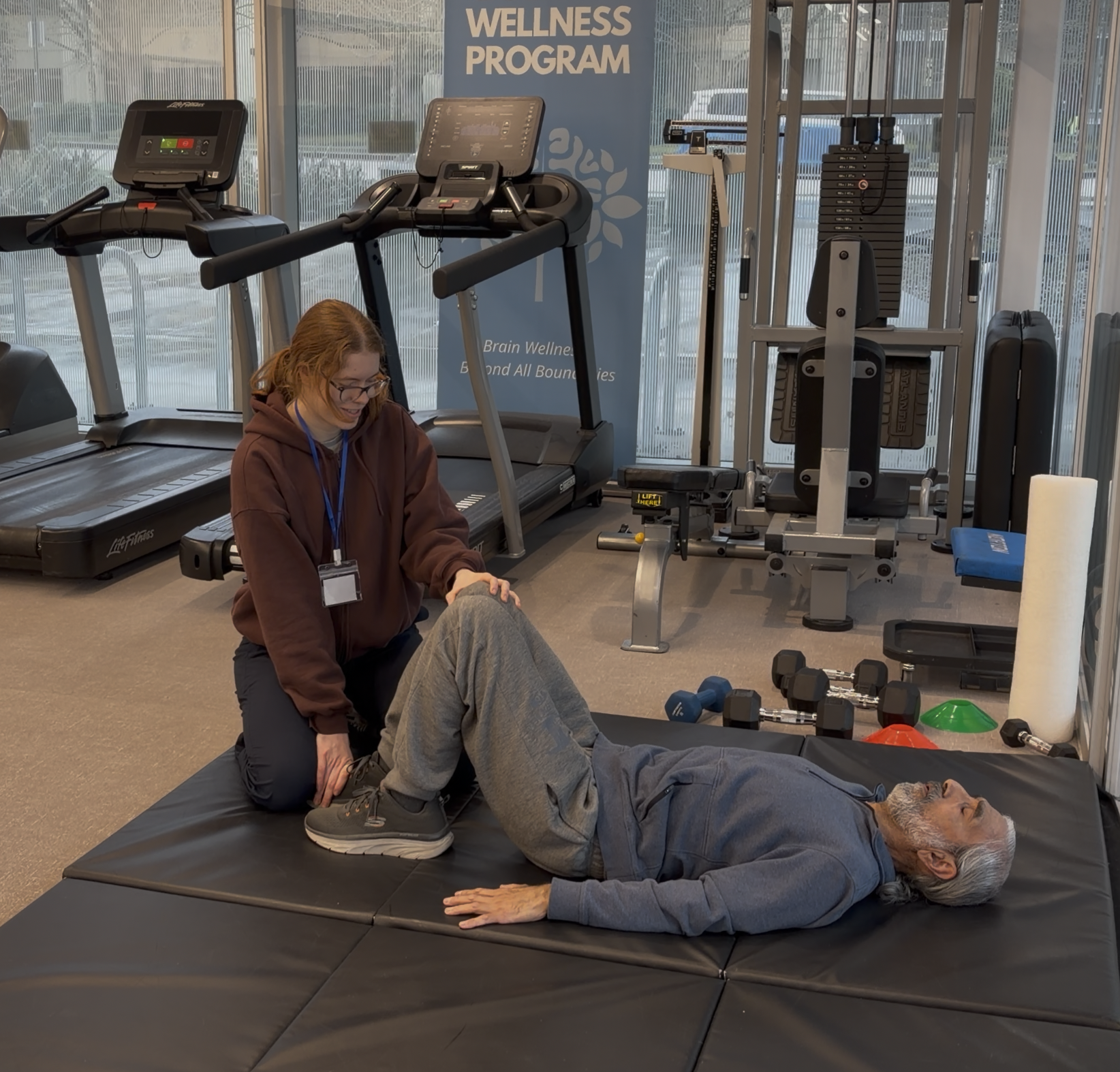
The work is indeed serious. As in any class, says Sally-Anne Stelling (Co-Director, BCBWP), participants are people who have completed clinical rehabilitation and are looking for a next step. “The goal here is to improve functionality. We work on walking skills, on getting on and off the floor, on balance, strength, cardiovascular fitness and independence.”
The class attracts people who, like Manjit, want to work. Ivan ticks off his weekly schedule: acupuncture, neurological exercise, speech therapy, massage and now this class as well. “I could just watch TV all day,” he says, “but that’s not me.” Ryan nods agreement. “These people push me, because I ask them to. They also,” he adds, “know when not to push me.” It gets results. “A year ago, it took me 50 seconds to get up from the ground, now it just takes seventeen.” Manjit, an electrician by trade with a logical approach to life, says, “These people are the best. They’re the best, because the program works.”
The learning, the improvement, is a two-way street. Volunteer Asami Yumibe, a final-year kinesiology student, talks about the Program’s impact on her interpersonal skills. “I’ve become attentive to what the participant says, and that lets me cue the exercise in a way they find relevant.” These interpersonal skills fit into a larger context. “I now see exercise through a different lens. I look beyond the clinical exercise, to the human being. The person is the focus.”
Leah Balliet, a clinical exercise physiologist, was first involved with the BCBWP as a student and is now the Program’s In-Person Exercise Coordinator. She conducts the final intake assessment for each new participant, and is responsible for tweaking the exercise regime to best meet that person’s needs. “Participants are motivated to work, and to improve their condition. Their motivation becomes our motivation. They want to do their best, and we want to do our best for them.”
Participants respond to this approach. Julia, now in her second term with the class, says, “I was so excited to come here. It gave me a next step to take, it’s a place where I feel comfortable. I am with other people like me, we share information, and we are treated with respect. I work really hard, but I also spend a lot of time giggling. I am so grateful.” She chokes up, waves a hand, says, “These are happy tears.”
The BCBWP applies clinical expertise in a human context. As Asami says, the person is the focus. And, as Manjit says, it works.