
How Puzzle Games Can Benefit Your Brain
By: David Kua
A Growing Brain Health Concern
Brain health is becoming an increasingly important topic worldwide. Today, more than 57 million people are living with dementia globally, and nearly 10 million new cases are diagnosed each year (World Health Organization, 2025). Even more concerning, projections suggest that these numbers could more than double to over 130 million by 2050 as populations age (Alzheimer’s Disease International, 2023).
Conditions like Alzheimer’s disease, dementia, Parkinson’s disease, and other neurodegenerative disorders are no longer rare. They are becoming one of the biggest public health challenges of our time. Because of this rising trend, there is growing interest in everyday habits that may help support brain function and improve quality of life for those affected.
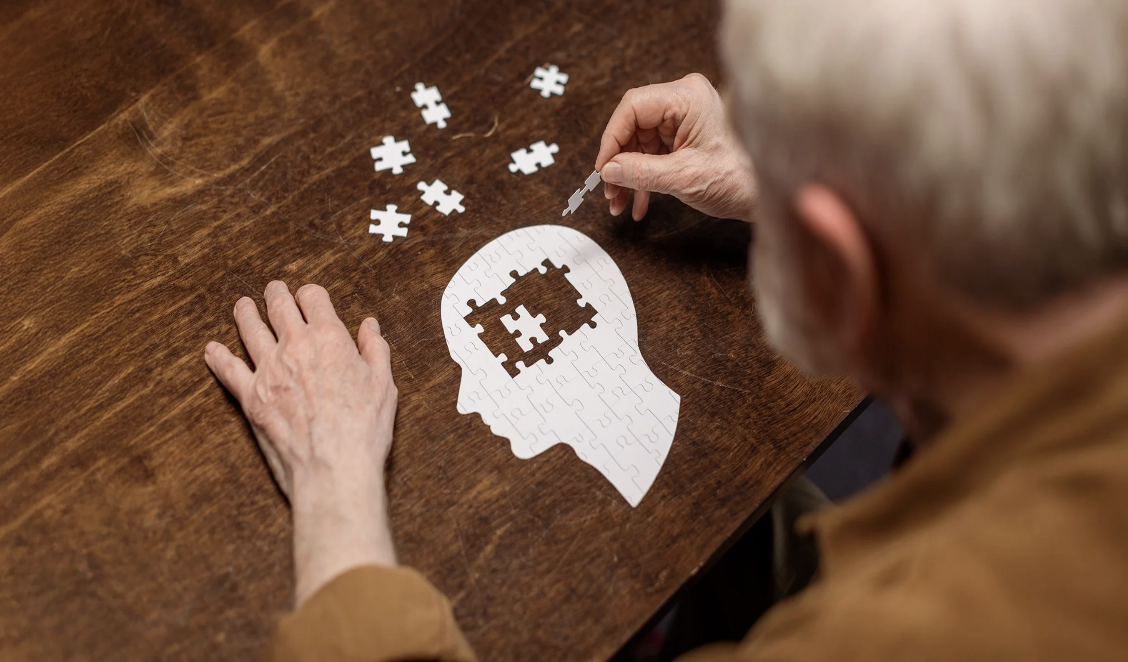
Photo from Forest of Dean Dementia Action Alliance
Use It or Lose It: The Power of Neuroplasticity
Your brain is constantly adapting based on how you use it. Neuroplasticity is the ability of the brain to form and reorganize synaptic connections, especially in response to learning, experience, or following injury (Marzola et al., 2023). This process follows a simple principle: the more you use certain neural pathways, the stronger they may become, while unused ones may begin to weaken (Bassi et al., 2019; Voss et al., 2017).
In the context of neurodegenerative conditions, this is especially important. Even when disease affects specific brain regions, targeted and repeated cognitive activities can help reinforce remaining pathways and support functional abilities (Jahan et al., 2024). With consistent mental stimulation, the brain can reorganize itself and improve performance on tasks, helping maintain cognitive function over time.
Key Cognitive Benefits of Puzzle Games
A Fun Mental Workout
Designed to be both enjoyable, games like sudoku and crossword puzzles provide an engaging way to activate the brain without being overwhelming as there are different levels to meet you where you are at.
Research shows that sustained engagement in games like Sudoku and crossword puzzles provides an accessible way to maintain cognitive function in older adults over time (Brooker et al., 2019; Park et al., 2013).
Memory and Recall
Crossword puzzles and word-based games challenge the brain to retrieve facts, words, and associations. This repeated practice can help support memory function, which is often affected in Alzheimer’s disease and other dementias.
A study from Duke University and Columbia University found that crossword puzzle training produced measurable cognitive benefits and slower memory loss in adults with mild cognitive impairment (Devanand et al., 2022).
Focus and Attention
By serving as a focused workout for the mind, completing puzzles requires sustained concentration, which strengthens attention networks in the brain. Regular practice can work to improve focus and reduce cognitive fatigue, possibly helping individuals maintain independence in daily tasks.
A meta-analysis of over 11,000 older adults found that regular engagement in cognitive leisure activities, such as puzzles, was associated with a 23% reduced risk of cognitive decline, which could help support the functional skills needed for daily activities (Yang et al., 2022).
Cognitive Flexibility and Problem Solving
Sudoku and other logic-based games can train the brain to use diverse strategies, recognize patterns, and solve problems efficiently. These skills help the mind adapt to changes in function and can slow the rate of decline in neurodegenerative conditions.
Researchers found that older adults who regularly engage in these puzzles have brain function equivalent to 10 years younger than their actual age in areas of logical reasoning and eight years younger in short-term memory (Brooker et al., 2019).
Final Thoughts
Easily integrated into any daily routine, puzzle games like sudoku and crossword puzzles are a simple and accessible way to support brain health. For individuals and families navigating neurodegenerative conditions, these activities can offer both cognitive stimulation and meaningful moments together. Solving puzzles as a group, sharing progress, or even engaging in lighthearted competition can create connection, support, and a sense of accomplishment along the journey.
Feel free to explore the BC Brain Wellness website and learn about the latest research, tips, and resources for living your best life.
References:
Alzheimer’s Disease International. (2023, September 21). World Alzheimer Report 2023: Reducing Dementia Risk: Never too early, never too late. ADI - World Alzheimer Report 2023. Retrieved March 10, 2026, from https://www.alzint.org/resource/world-alzheimer-report-2023/
Bassi, M. S., Iezzi, E., Gilio, L., Centonze, D., & Buttari, F. (2019). Synaptic plasticity shapes brain connectivity: Implications for Network Topology. International Journal of Molecular Sciences, 20(24), 6193. https://doi.org/10.3390/ijms20246193
Brooker, H., Wesnes, K. A., Ballard, C., Hampshire, A., Aarsland, D., Khan, Z., Stenton, R., Megalogeni, M., & Corbett, A. (2019). The relationship between the frequency of number‐puzzle use and baseline cognitive function in a large online sample of adults aged 50 and over. International Journal of Geriatric Psychiatry, 34(7), 932–940. https://doi.org/10.1002/gps.5085
Devanand, D. P., Goldberg, T. E., Qian, M., Rushia, S. N., Sneed, J. R., Andrews, H. F., Nino, I.,Phillips, J., Pence, S. T., Linares, A. R., Hellegers, C. A., Michael, A. M., Kerner, N. A., Petrella, J. R., & Doraiswamy, P. M. (2022). Computerized Games versus Crosswords Training in Mild Cognitive Impairment. NEJM Evidence, 1(12). https://doi.org/10.1056/evidoa2200121
Jahan, I., Harun-Ur-Rashid, M., Islam, M. A., Sharmin, F., Jaouni, S. K. A., Kaki, A. M., & Selim, S. (2024). Neuronal plasticity and its role in Alzheimer’s disease and Parkinson’s disease. Neural Regeneration Research, 21(1), 107–125. https://doi.org/10.4103/nrr.nrr-d-24-01019
Marzola, P., Melzer, T., Pavesi, E., Gil-Mohapel, J., & Brocardo, P. S. (2023). Exploring the role of neuroplasticity in development, aging, and neurodegeneration. Brain Sciences, 13(12), 1610. https://doi.org/10.3390/brainsci13121610
Park, D. C., Lodi-Smith, J., Drew, L., Haber, S., Hebrank, A., Bischof, G. N., & Aamodt, W. (2013). The impact of sustained engagement on cognitive function in older adults. Psychological Science, 25(1), 103–112. https://doi.org/10.1177/0956797613499592
Voss, P., Thomas, M. E., Cisneros-Franco, J. M., & De Villers-Sidani, É. (2017). Dynamic Brains and the Changing Rules of Neuroplasticity: Implications for learning and recovery. Frontiers in Psychology, 8, 1657. https://doi.org/10.3389/fpsyg.2017.01657
World Health Organization: WHO & World Health Organization: WHO. (2025, March 31). Dementia. Retrieved March 10, 2026, from https://www.who.int/news-room/fact-sheets/detail/dementia
Yang, X., Xu, X. Y., Guo, L., Zhang, Y., Wang, S. S., & Li, Y. (2022). Effect of leisure activities on cognitive aging in older adults: A systematic review and meta-analysis. Frontiers in Psychology, 13, 1080740. https://doi.org/10.3389/fpsyg.2022.1080740