
BC Brain Wellness Program | By: Ava Cervas
Healthy aging for older adults. Is there a one-size-fits-all solution?
A nationally discussed topic amongst policy makers and academics, the physical and emotional well-being of older Canadians remains a concern on the local level: 17% of Vancouver’s population alone is made up of individuals 65+ – a number growing exponentially.
Watson et. al points out a recent, all-too-familiar detriment impacting healthy aging amongst Canadians: “[the COVID-19 pandemic] has illustrated the especially alarming levels of loneliness and isolation of our elderly population, which certainly motivates endeavours to improve upon such troubling conditions.”
A promising intervention? Embracing creativity.
Connecting with Creatives
I spoke directly with six members of the Brain Wellness Program’s Creative Collective group about their stories and how artistic expression continues to make an impact on their lives.
Meet: Lise
“...I’m 65 years old now, which is so unexpected. I never expected to live this long.”
At the age of 25, Lise was diagnosed with a serious illness for which she had brain surgery and was told she had six months left to live. Lise was devastated at the loss of her future dreams: she had wanted to eventually write a book, be an artist, live in England, ride a motorcycle, and so much more. To give these things up and just wait for death to arrive was so utterly painful. “I had to decide: okay ... I need to go do everything now, and I don’t have to be afraid of the consequences. …I had to hurry up.”
The doctors kept telling her it was just a matter of time. “Just wait,” they said. But she couldn’t do that anymore. Lise didn’t have to worry about future consequences with this time limit. “You know, it was great. I wasn’t afraid of failure because I wrote a book, even though I thought I couldn’t. But the thing is, I kept on living.”
Her six months of accelerated life extended on and on, until another MRI forty years later changed everything: “Your original diagnosis was incorrect,” the doctors said. “You never needed brain surgery.”
They expected her to be ecstatic, but she was devastated. It cast doubt on every decision she had ever made, brought up the spectre of the children she hadn't had because of the diagnosis, and she couldn’t bear the possibility of living with a future for which she had never planned financially. After a period of time where she mourned the loss of how she had been able to live without fear, Lise realized that she had to go back to how she had survived successfully, by living six months at a time. Grab the future and force it into the present. Don't waste time and put things off to "later." Make every moment count.
Lise does her best to use what she has learned to make her life and learning worthwhile, as well as make a positive impact on others. She teaches mental health topics online, and is a wedding officiant who creates personalized wedding ceremonies. She still writes, and is currently writing a hybrid memoir non-fiction book called "Beyond Happily Ever After, which is how newly married couples can make a great relationship last into the future – by using creativity and extreme deadlines.
More on Lise’s art and story can be found on the BC BWP feature: May 2024 Creator of the Month: Lise Leroux.
She was also a guest on a podcast: Andrew Petty is Dying | 006 The Nine Lives of Lise Leroux
Meet: Marjorie
“I create art to preserve memories and explore universal themes.”
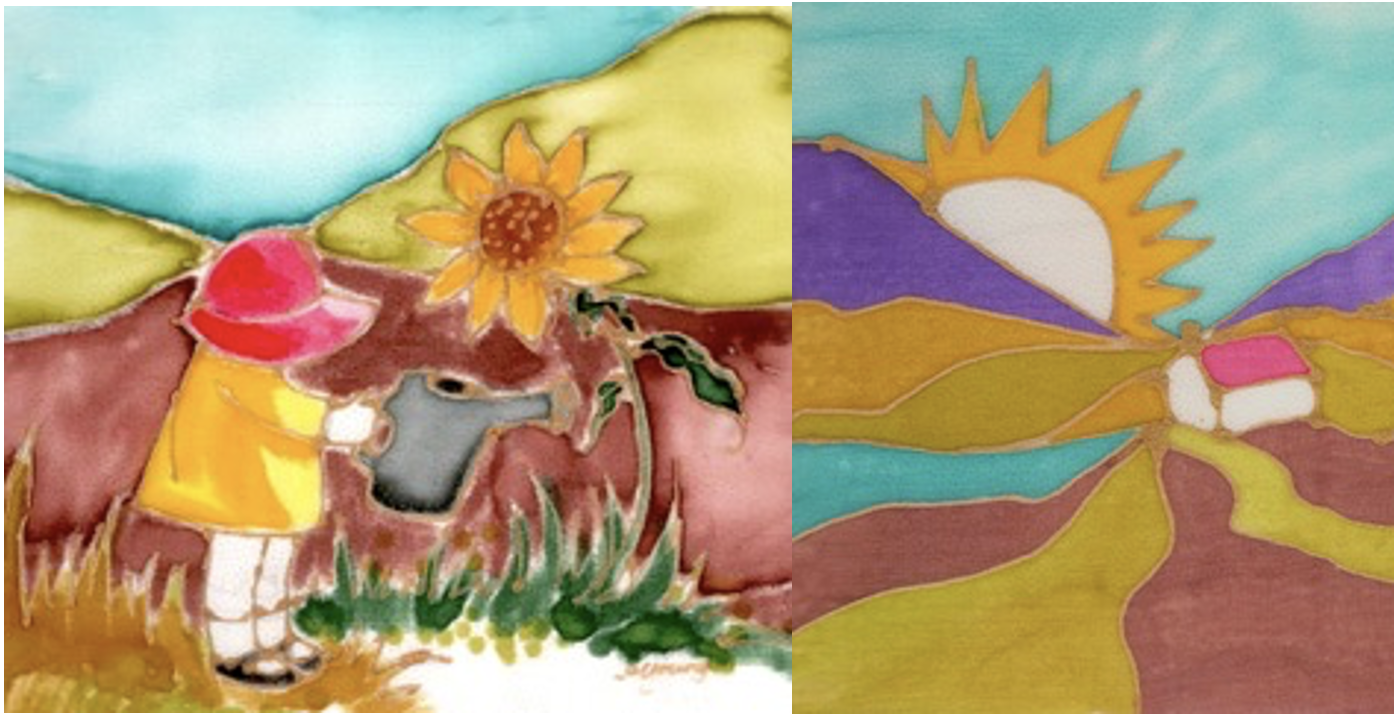
Artwork for Marjorie’s latest Multifaith submission, Hope Blooms (left) and Hope Rises (right)
Marjorie is a retired speech-language pathologist with a background in music and fine arts. This training was useful in her clinical practice throughout the 60’s-70’s, as there were no drawing apps or technologies for creating images at that time. Her work with non-verbal or pre-literate clients with autism or neuro-motor issues required the use of picture communication boards, which she hand-drew.
Her artwork integrates inspiration from friends, family, and universal themes. She submits work annually to the Multifaith organization, which publishes calendars with themes such as Peace, Renewal, Joy, Solitude, and Hope. Hope Rises and Hope Blooms, pictured above, were created with gutta and fabric dye on silk.
“We grew up without television, ... and my mother was a preschool teacher,” two factors that Marjorie described as where her artistic passions bloomed. Creativity spreads across her family: having five nephews in various careers, such as video game design, commercial art, or directing TV documentaries.
Many of Marjorie’s projects act as time capsules, integrating inspiration from loved ones. She shared the following:
“This was a collage [of] my high school friends. Some of us have been together since grade one through university. So each of these [photographs] is a decade: we celebrate our birthdays – 50th, 60th, 70th, or 80th – together.”
More on Marjorie’s art and story can be found on the BC BWP feature: November 2023 Creator of the Month: Marjorie Young
Meet: David
“I stayed alive with art. ...my art really was for my soul.”
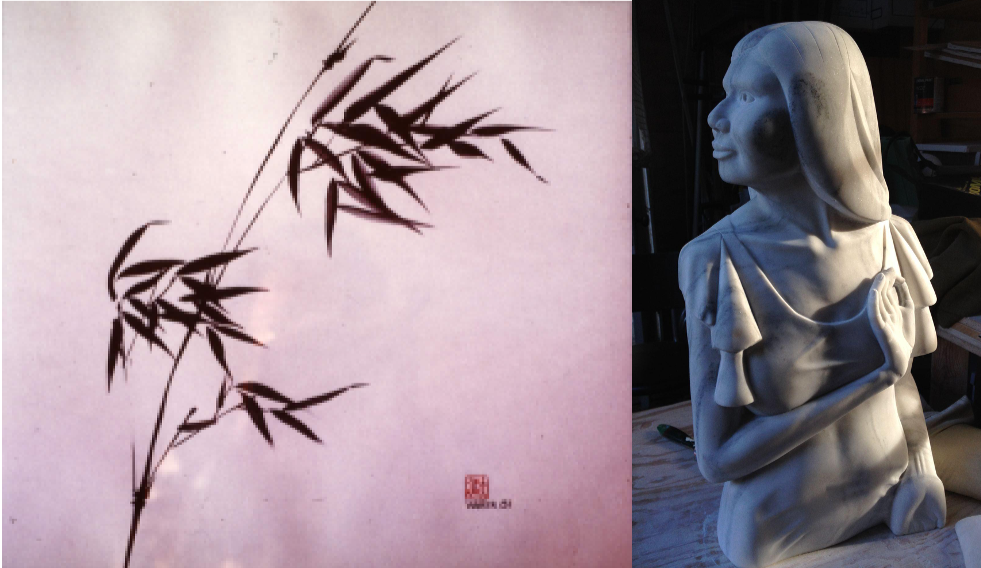
David took on a career as a professor of cell biology in the UBC Department of Pathology. Electron microscopy was a new technology developed in the 1960s, which he began to use in the 1970s. This new development in microscopy enabled a clear view of cell ultrastructure that was not well known previously. David enjoyed seeing the beauty of these natural structures.
About 20 years ago, he followed up on his dream of learning the technique of stone sculpture from a classically trained sculptor. Through this medium, using different kinds of stone, he was able to create large works representing some of what he saw using the electron microscope. The Golgi Apparatus, present in all cells, is David’s favourite organelle. He was delighted to sculpt his own Golgi Apparatus in marble.
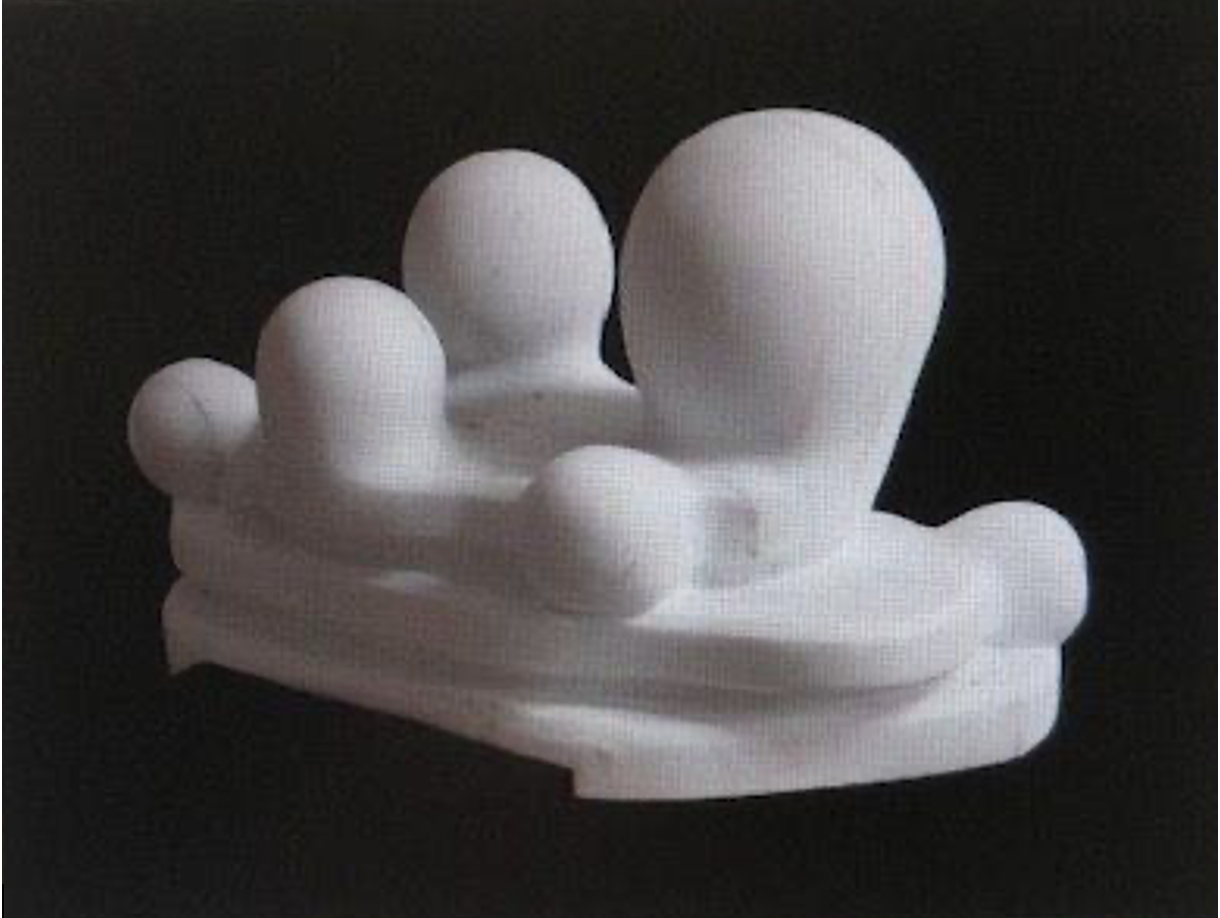
David’s Golgi Apparatus structure
A friend who is a professional photographer has created a book of photos of some of David’s work, along with his descriptions of these pieces. This provides a lasting record of his work, which he is pleased to be able to share with others. Having a rich, creative life in later years is essential to his continuing enjoyment of life.
More on David’s story can be found within his BC BWP feature: June Creator of the Month: David Walker
Meet: Rosemarie
“I always had this thing about music. Music is just amazing.”
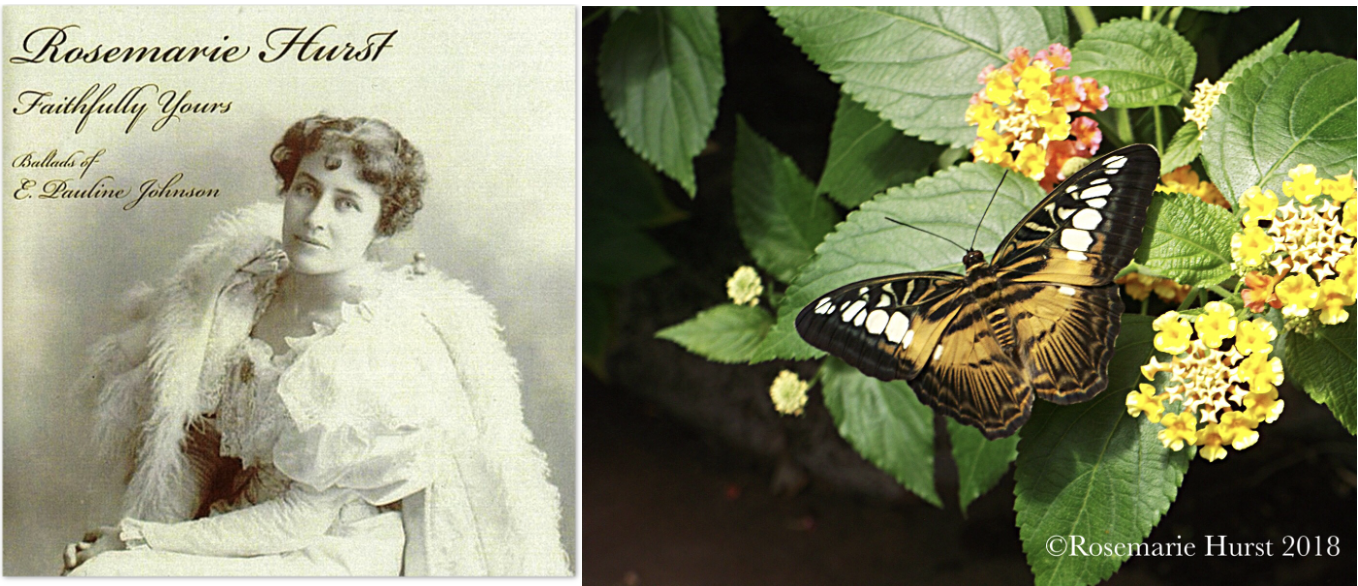
Rosemarie is a poet, musician, and nature photographer. “I’ve always been sort of creative since I was younger, and [with] my first job at 18, the first thing I bought myself was a guitar. I’ve been playing it ever since as best I can.”
The ability to play an instrument has remained a meditative, comforting passion for Rosemarie throughout her life. “I still play my guitar. And when I had my stroke, that was the first thing [I could do], being in the hospital for two months. I could still [play the guitar] with my fingers, and I thought: okay, I can still find a finger pick – yay!”
A big inspiration within her art is Canadian poet, author, and performer Pauline Johnson. “She’s one of my heroes, I love her poetry ... my mom and I used to go visit her house and go to the powwows in Ontario at Six Nations,” Rosemarie recalled. “And so [when] I had my second stroke, I thought, I had this thing on the back burner: to write the music to Pauline’s poetry. Which was really a challenge,”
Eventually fulfilling this goal, Rosemarie was invited to perform these songs at the Chiefswood Museum in Ontario. “I mean, for me, it was very magical to be there. Because you know, mom and I used to go there all the time ... she would have just been so proud. ...that was something that I never thought would happen.”
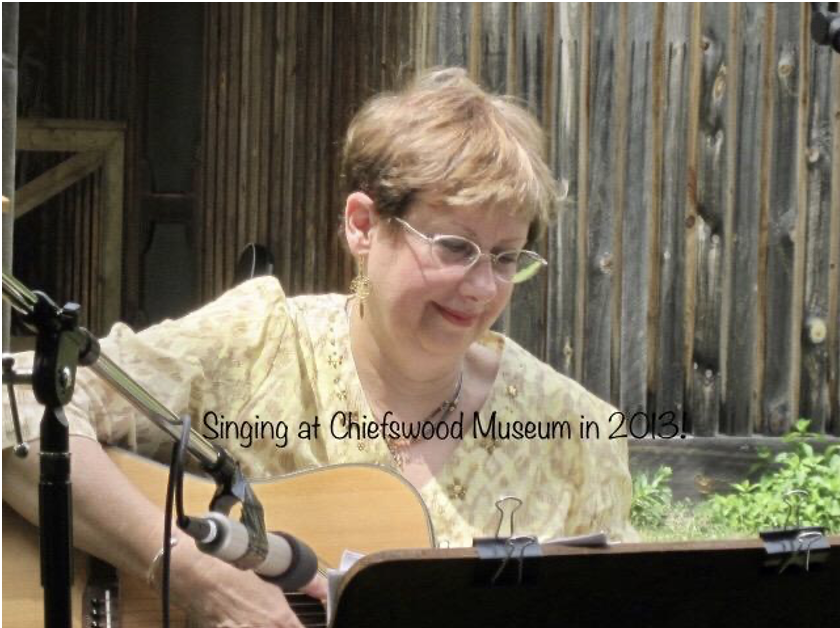
More on Rosemarie’s art and story can be found on the BC BWP feature: September Creator of the Month: Rosemarie
Meet: Natasha
“Creativity can be so different in many ways, and I think it opens up the child in you.”
Natasha considers herself a creative person: always finding alternate pathways to explore the world through a different lens. Her artistic passion in particular thrives through physical expression: improv.
“When I was little, I was very shy and had speech impediment issues.” Natasha shared. “In elementary school, there was a teacher who got us into a school play … and somehow, I came out of my shell.” Her family wasn’t necessarily the theatre-type, but Natasha continued to pursue her newfound interest through drama classes in high school. Eventually, she found herself drifting away from her creative side, taking on a career in nursing and hospitality.
A reconnection to the arts remained in Natasha’s cards, particularly after facing neurological challenges. “I realized with what [I was going through] that I wanted to tap into building more confidence with my speech and kind of stuff. And I was like, ‘What did I do back then? In the old days, when I was little? Oh yeah!”
Natasha found her way back into improv through classes with the BC BWP. First through online calls, eventually building the confidence to attend in person. “Basically, every time, just showing up and committing to yourself is the best thing”. She continued: “I find with the population that usually goes to these things, people are all different. We may all walk in different paths and stuff, but there’s so many similarities.”
More on Natasha’s art and story can be found on the BC BWP feature: July Creator of the Month: Natasha Perrault
Meet: Karen
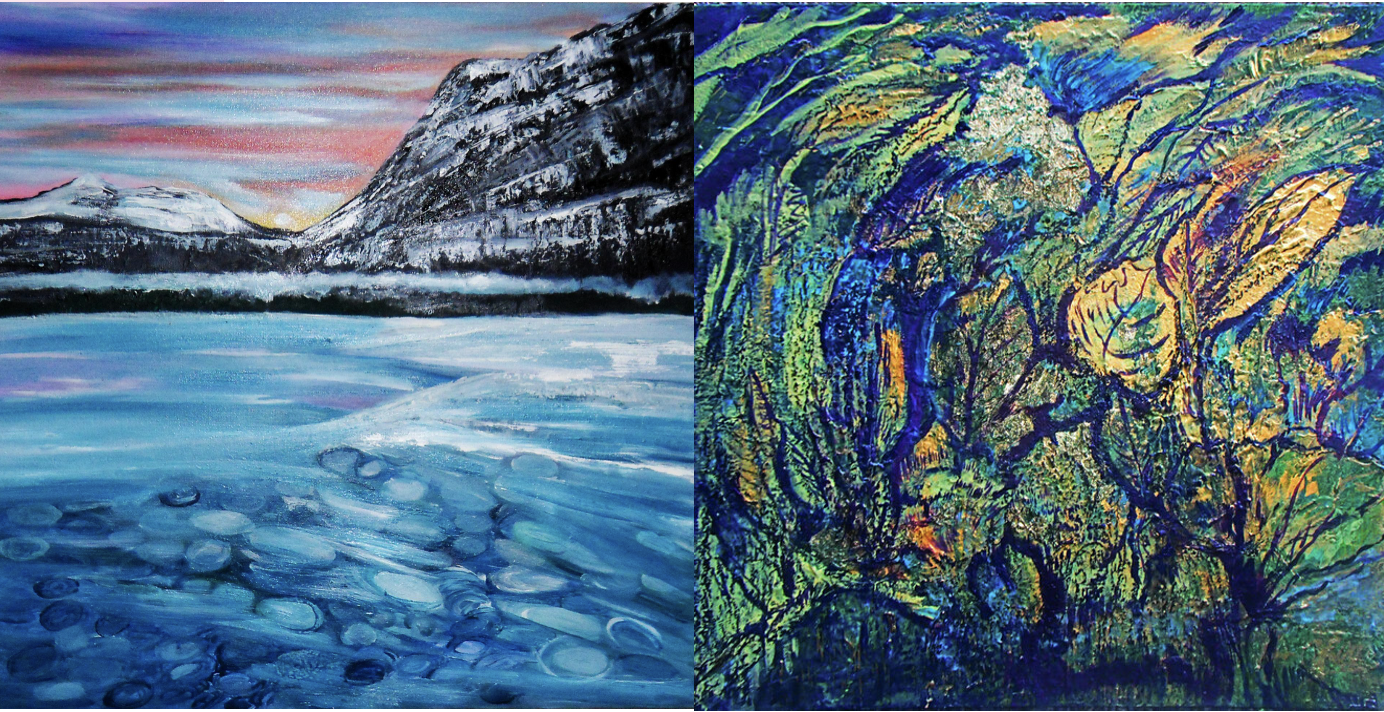
Karen is a long-time creative, taking on art in various forms and exhibiting her work with the BWP and other local organizations.
“My journey started with visual painting in BC. I joined community groups and non-profits, and painting left me with a sense of calm.” Karen wrote, also allowing her to connect and appreciate the nature around her. “I have been a self-advocate for disability arts, people living with chronic illness, independent achievement, and [am] a recognized community artist in recent years.”
More on Karen’s story can be found within her BC BWP feature: September Creator of the Month: Karen Colville.
Connected Themes
These creatives offered incredible stories, each of their own positionalities and experiences. Yet, some common themes arose within each conversation:
Finding Community through Creative Expression
Taking on creativity posed many benefits for each interviewee, but also allowed them to connect with others on the basis of passion through their own endeavours.
“Friends that I’ve met in Italy or in England, we still correspond and keep in touch by email,” Marjorie explained, her group of peers composed of retired art teachers and illustrators. “We set up a challenge amongst ourselves: do a painting and then show it on Facebook.”
Lise, on the other hand, continues using her creativity in helping others, like facilitating group help sessions with the BC Writers’ Federation, or in mentoring prisoners as they regain their writing abilities through rehabilitation services in the U.S.
Digitization of the Creative Community
Several interviewees noted how technology has integrated into their creative processes.
Rosemarie’s music, for example, was uploaded onto online streaming services like Apple Music and YouTube through self-teaching. But in this regard, Rosemarie noted that having her work so widely available on the web didn’t necessarily impact the way she sees her art, or how others perceive it. The most important reflection point at the end of the day is her own satisfaction: “Do I like what I’m doing, or what I’ve done?”
Natasha, on the other hand, noted that online versus in-person improv are two drastically different experiences. “In-person, there’s a deeper connection,” she explained. “Sometimes I think with online stuff, maybe you can be a little more transparent because there’s a safeguard. ‘I’ll never meet this person’ kind of thing.”
Quarantined Creativity
Considering the comments of Watson et al. on the relationship between older adults and isolation during COVID-19, I asked the BC BWP Creatives how such a pandemic – allowing for more time at home – impacted their creative pursuits, either positively or negatively.
Marjorie’s two passions were halted by this in different ways. For her orchestra: “We weren’t allowed to rehearse ... and people lost a lot of their access to things they really enjoyed.” Zoom rehearsals were attempted but not perfect – missing that focal, group practice setting. However, “as far as the art, it was great. I mean, I just had a lot of time, and I did a lot of work on my own.”
“That was a tough time. ...I couldn’t go anywhere, do anything much. ...it was like living in a box.” Rosemarie recalled her own experience. “You know it’s funny because other people I know in the music business, they did a lot more writing. I didn’t.”
Lise builds on a similar note, having moved back to Canada right before COVID hit. “I think writing was something I already had and that helped me get through it. I was used to being sort of alone in these circumstances, so COVID just made it worse," she noted. “It forced people to, you know, be inside their own heads and their own relationships a lot more than they were used to.”
Creative Expression, Aging, and Mental Health
One particular question harvested similar answers from each interviewee: that creative expression has been an incredible tool towards their mental health and aging journey. From serving as a pastime to a form of healing, here’s what they had to say:
Lise explained how writing helps her better cope and understand different aspects or hardships within her life. The ability to do so has allowed her to help others overcome their own times of difficulty. “You’re creative [and] expressive; transform this and write characters that are struggling with something, then show how they resolve things. That has kind of helped my own mental health: by showing me I can resolve some of my own challenges.”
Natasha, once in a while, takes off what she calls a “freedom week,” where she temporarily disconnects from improv. Stepping back from her passion allows her to refocus and avoid feeling overwhelmed or fatigued; reminding herself what it is about improv which she truly enjoys. “That leaves me wanting more.”
Karen notes in her piece with the BC BWP: “art has and continues to be a cornerstone in her life, providing calm and peace. To her, art is more than just a technique. It is a tool for healing and personal growth; having helped her cope with personal health challenges.”
Advising the Past, Present, and Future
“I think the main thing is that it’s so helpful to take on a hobby of any kind. People think: ‘Well, I can’t paint or write or whatever, because I’m no good at it.’” Lise shared. “But the thing is, whether you’re younger or older, we all start from a basis of not knowing how. ...You can always learn.” And a piece of advice to her younger self? Don’t wait – just go for it.
Rosemarie touched on something similar within her stroke recovery group. “There [was] a lady that was saying how she sang with her daughters as a group. ‘I can’t sing anymore…’ she said. I said: ‘Sure you can! It may not be on key, but you can sing to me. Don’t give up, you know, just keep going with one foot in front of the other.’” She recalled. “I focus on what I can do, not what I can’t do.”
Final Thoughts
So there you have it: the stories of six artists and six passions. Each experience offers its uniqueness, but also weaves together and finds commonalities with each other; a display of connectivity despite hailing from such different paths of life.
“What I really love is your interest in [this],” David brought up during our conversation. “[There aren’t] a lot of people that are really interested in sharing how fun it is” – a sentiment also endorsed by other interviewees in having this opportunity to recap their creative pasts and presents. A simple statistic is not merely enough information to contextualize the depths of this community, and diving into these individual stories proves just that.
Such pursuits have played an incredibly pivotal role for the BC BWP Creatives throughout their lives and as they grow older. So, can healthy aging for older adults have a one-size-fits-all solution? There isn’t a proper yes or no answer. Creative expression, however, is one step in the right direction.
Whether it be an extension of academics, an intergenerational passion, or a life-altering diagnosis, artistic expression can have its highs and lows in the least expected corners of life. The best part is that it can always be there as an outlet, at any point in time. Creativity holds no bounds.
If you would like to showcase your creative expression talent/experience, check out the BC Brain Wellness Program Creative Collective page here: https://www.bcbrainwellness.ca/creative-collective
We would love to feature you and your inspiration!
References:
City of Vancouver. (2025, February 5). Engaging and supporting the aging population: Older Persons Strategic Framework. https://vancouver.ca/news-calendar/supporting-aging-population-strategic-framework-feb-2025.aspx#:~:text=According%20to%20the%202021%20Census,and%20healthy%20in%20their%20communities.
Watson, B., Das, A., Maguire, S., Fleet, G., & Punamiya, A. (2024). The little intervention that could: creative aging implies healthy aging among Canadian seniors. Aging & Mental Health, 28(2), 307–318. https://doi.org/10.1080/13607863.2023.2246416